
Introduction
For years, doctors and sleep experts told us the same thing: get eight hours of sleep each night. We counted our hours like savings in a bank account. Eight hours meant success. Six hours meant failure.
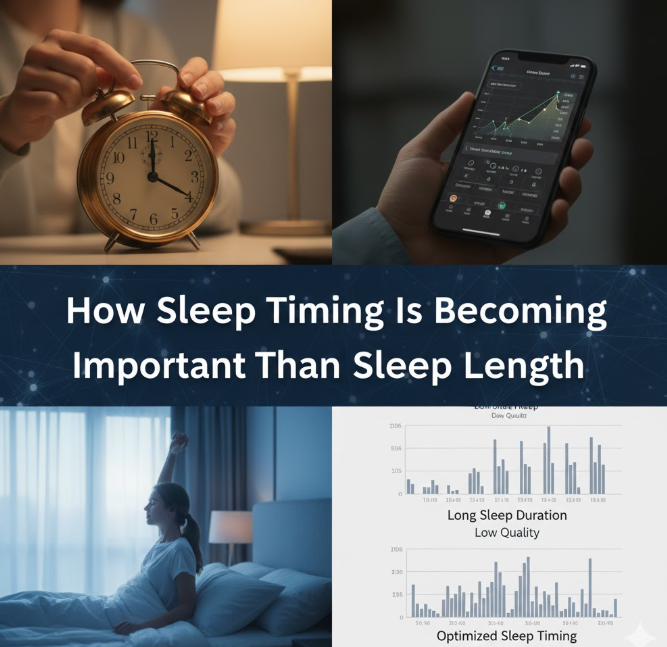
But something interesting is happening in sleep science. Researchers are finding that the clock on your wall might matter more than the timer on your phone. When you sleep could be more important than how long you sleep.
Think about it this way. Would you rather have $100 at the right time to pay your rent, or $200 two weeks after your rent is due? Timing matters. Your body works the same way with sleep.
This article explores why sleep timing has become a hot topic in health circles. You’ll learn about your body’s internal clock, what happens when you fight against it, and how to use timing to your advantage.
Your Body Has Its Own Clock
The Circadian Rhythm Explained
Your body runs on a 24-hour cycle called the circadian rhythm. This internal clock controls when you feel awake and when you feel sleepy. It’s like having a tiny timekeeper inside your brain.
This clock doesn’t just control sleep. It manages:
- Your body temperature
- Hormone release
- Hunger signals
- Energy levels throughout the day
- Even how well your immune system works
The main control center sits in your brain, right behind your eyes. Scientists call it the suprachiasmatic nucleus, but you can just think of it as your body’s master clock.
Light: The Master Controller
Light is the most powerful signal for your internal clock. When light hits your eyes in the morning, it tells your brain: “Time to wake up and start the day.”
As the sun sets and darkness arrives, your brain gets a different message. It starts making a hormone called melatonin. This chemical makes you feel drowsy and ready for bed.
Modern life throws a wrench in this system. Bright lights at night from phones, computers, and TVs confuse your brain. Your body doesn’t know if it’s noon or midnight.
Why Eight Hours Isn’t the Whole Story
The Quality vs. Quantity Debate
Imagine eating a meal. Would you rather have a perfectly cooked, nutritious dinner that takes 30 minutes to eat, or a bag of chips that you munch on for two hours? Quality beats quantity every time.
Sleep works the same way. Eight hours of sleep at the wrong time might leave you more tired than six hours at the right time.
Research from sleep labs shows something surprising. People who sleep during their body’s natural sleep window wake up feeling more refreshed. They perform better on memory tests. Their mood improves. Their bodies recover faster.
Sleep Stages and Timing
Sleep isn’t one continuous state. Your brain cycles through different stages throughout the night:
- Light sleep (Stage 1 and 2)
- Deep sleep (Stage 3)
- REM sleep (dream sleep)
Each stage serves a different purpose. Deep sleep repairs your body. REM sleep processes memories and emotions.
Here’s the key point: these stages happen in a specific order and at specific times during the night. If you sleep at the wrong time, you might miss out on crucial deep sleep or REM sleep.
The Science Behind Sleep Timing
Peak Sleep Windows
Studies show that your body has an ideal sleep window. For most people, this window opens between 10 PM and midnight. Your body produces the most melatonin during these hours.
Going to bed during this window aligns with your natural biology. Your body temperature drops. Your heart rate slows. Everything shifts into recovery mode.
When you miss this window and stay up until 2 AM, you’re fighting against your biology. Even if you sleep until 10 AM and get eight hours, the sleep quality differs.
Hormone Production and Timing
Different hormones get released at different times during sleep:
Growth Hormone: Peaks during deep sleep in the first half of the night. This hormone repairs tissues, builds muscle, and strengthens bones.
Cortisol: Should be lowest around midnight and rise toward morning. This hormone helps you wake up with energy.
Melatonin: Rises in the evening and falls in the morning. This is your natural sleep signal.
When you sleep at odd hours, these hormone patterns get disrupted. Your body still tries to release them at the usual times, but you’re awake. The result? Poor recovery and daytime fatigue.
| Hormone | Peak Time | Function | Impact of Poor Timing |
|---|---|---|---|
| Growth Hormone | 11 PM – 2 AM | Tissue repair, muscle building | Slower recovery, reduced healing |
| Melatonin | 9 PM – 7 AM | Sleep regulation | Difficulty falling asleep |
| Cortisol | 6 AM – 9 AM | Energy, alertness | Morning grogginess, afternoon crashes |
| Leptin/Ghrelin | During sleep | Appetite control | Increased hunger, weight gain |
Real-World Evidence
The Night Shift Problem
Night shift workers provide clear evidence that timing matters. These workers often get the same amount of sleep as day workers. But they face higher rates of:
- Heart disease
- Diabetes
- Depression
- Obesity
- Certain cancers
They’re sleeping the wrong hours. Their bodies never fully adjust. Even after years of night shifts, the internal clock keeps trying to pull them back to a normal schedule.
Weekend Warriors
Many people sleep late on weekends to “catch up” on sleep. They might get nine or ten hours. But studies show this doesn’t fully compensate for poor sleep timing during the week.
In fact, drastically different sleep times on weekends can create something called “social jet lag.” Your body gets confused about what time zone it’s in. Monday morning feels like you just flew across the country.
Technology and Modern Sleep Challenges
Blue Light’s Impact
Smartphones, tablets, and computers emit blue light. This specific wavelength of light is particularly good at suppressing melatonin.
Using these devices before bed delays your natural sleep window. Your brain thinks the sun is still up. Even if you turn off the device and try to sleep, your body isn’t ready.
One study found that people who used tablets for two hours before bed took longer to fall asleep. Their melatonin release delayed by over an hour. They felt less alert the next morning.
The Always-On Culture
Modern work culture doesn’t respect natural sleep timing. Emails arrive at all hours. Social media never sleeps. Entertainment is available 24/7.
This constant stimulation makes it hard to wind down at the right time. Your brain stays in “go mode” when it should be shifting to “rest mode.”
Finding Your Personal Sleep Window
Chronotypes: Are You a Lark or an Owl?
Not everyone has the same ideal sleep window. Your chronotype determines whether you’re naturally a morning person or a night person.
Morning Larks: Feel best waking up early (5-7 AM) and sleeping early (9-11 PM). They hit peak productivity in the morning.
Night Owls: Naturally stay up late (midnight-2 AM) and sleep in (8-10 AM). Their brains work best in the evening.
Intermediate Types: Most people fall somewhere in between these extremes.
Your genes partially determine your chronotype. Fighting against it is like trying to write with your non-dominant hand. Possible, but inefficient and tiring.
How to Identify Your Natural Window
Try this experiment when you have a free week:
- Go to bed only when you feel sleepy
- Wake up without an alarm
- Track what times your body naturally chooses
- Notice when you feel most alert during the day
After several days, you’ll see a pattern emerge. This is your natural sleep window.
Practical Steps to Align Your Sleep Timing
Morning Routines That Set You Up
Your morning actions impact your sleep that night. Here’s how to start right:
Get sunlight within 30 minutes of waking. Step outside for even five minutes. This resets your internal clock and tells your body: “Day has started.”
Eat breakfast within an hour of waking. Food is a secondary time cue for your body. Regular meal timing supports regular sleep timing.
Exercise in the morning or early afternoon. Physical activity helps regulate your circadian rhythm. Just avoid intense workouts within three hours of bedtime.
Evening Wind-Down Strategies
Creating the right evening routine prepares your body for sleep:
Dim the lights 2-3 hours before bed. Lower light levels signal your brain to start melatonin production.
Set a device curfew. Stop using phones and computers at least one hour before sleep. If you must use them, enable blue light filters.
Keep a consistent bedtime. Going to bed at the same time every night trains your body. Aim for no more than a 30-minute difference on weekends.
Lower the temperature. Your body needs to cool down to sleep well. Set your thermostat between 65-68°F (18-20°C).
The Temperature Connection
Your Body’s Thermal Rhythm
Body temperature isn’t constant throughout the day. It rises and falls in a predictable pattern:
- Lowest around 4-5 AM
- Rises through the morning
- Peaks in late afternoon
- Drops in the evening
This temperature drop in the evening is a powerful sleep signal. It works together with melatonin to make you drowsy.
When you sleep at the wrong time, you’re fighting against your temperature rhythm. Your body might be warming up when you’re trying to sleep. This makes quality sleep nearly impossible.
Using Temperature to Your Advantage
Take a warm bath 90 minutes before bed. When you get out, your body temperature drops rapidly. This mimics the natural evening temperature drop and promotes sleepiness.
Keep your bedroom cool. A warm room fights against your body’s need to cool down for sleep.
Wear socks to bed if you have cold feet. Cold feet can prevent the necessary heat redistribution from your core to your extremities.
Children and Sleep Timing
Why Kids Need Earlier Bedtimes
Children’s internal clocks run slightly different from adults. They naturally need more sleep and often need earlier bedtimes.
School schedules often conflict with teens’ natural rhythms. Teenagers’ internal clocks shift later during puberty. They naturally want to stay up late and sleep in.
Forcing teens to wake up at 6 AM for school cuts into their natural sleep window. Many schools are now starting later, recognizing this biological reality.
Setting Up Kids for Success
For younger children, aim for bedtimes between 7-9 PM. This aligns with their natural biology and ensures they get enough sleep before school.
Create strong bedtime routines. Consistency matters even more for children than adults. Their developing brains need regular timing to develop healthy sleep patterns.
Limit screen time, especially in the evening. Children’s eyes are more sensitive to blue light than adult eyes.
Shift Work and Irregular Schedules
When You Can’t Choose Your Hours
Some jobs require working at night or rotating shifts. If you can’t change your schedule, you can still optimize your sleep:
Stay consistent. If you work nights, stick to the same sleep schedule even on days off. This helps your body adapt.
Create darkness. Use blackout curtains and sleep masks. Your bedroom should be completely dark during your sleep time.
Minimize light exposure. Wear blue-light-blocking glasses during your night shift. This helps preserve your melatonin.
Strategic napping. A 20-30 minute nap before your shift can boost alertness. Avoid naps longer than 30 minutes as they can leave you groggy.
Rotating Shifts
If your schedule rotates, try to rotate forward (day to evening to night) rather than backward. This aligns better with your natural clock.
Give yourself at least three days to adjust when changing shifts. Your body needs time to reset its internal timing.
The Social Impact
Relationships and Sleep Timing
Different sleep schedules can strain relationships. One partner is a morning lark, the other a night owl. They barely see each other when both are alert and happy.
Finding compromise matters. Maybe the night owl adjusts slightly earlier, and the morning lark stays up a bit later. Meeting in the middle respects both chronotypes.
Work Performance
Companies are starting to recognize that one size doesn’t fit all. Some allow flexible start times. Employees can choose hours that match their natural rhythms.
When people work during their peak alertness window, productivity soars. Mistakes decrease. Creativity improves. Job satisfaction increases.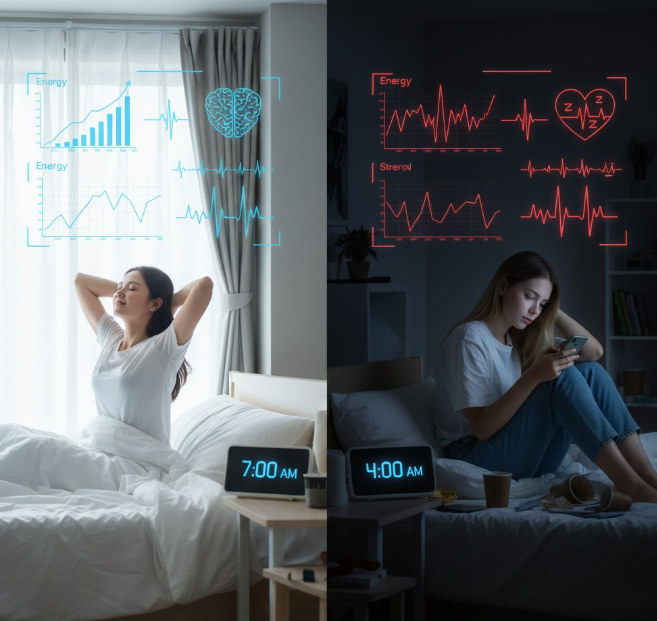
Measuring Your Progress
Signs of Good Sleep Timing
How do you know if you’ve found your ideal sleep window? Look for these signs:
- You fall asleep within 15-20 minutes
- You wake up feeling refreshed, not groggy
- You don’t need an alarm clock (or wake up just before it)
- Your energy stays steady throughout the day
- You don’t crave caffeine after morning
- Your mood feels stable
Tracking Tools
Simple sleep diaries work well. Note your bedtime, wake time, and how you felt the next day. After a few weeks, patterns emerge.
Wearable devices can track sleep stages and timing. While not perfectly accurate, they provide useful data about your sleep patterns.
Apps can remind you to start winding down at the same time each evening. Consistency is key to training your internal clock.
Common Mistakes People Make
Trying to Force a Schedule
You can’t simply decide to become a morning person if you’re naturally a night owl. Your genes and biology play a role.
Instead of fighting your nature, work with it. Find ways to align your life with your chronotype when possible.
All-or-Nothing Thinking
Missing your ideal sleep window one night doesn’t ruin everything. Life happens. Your body can handle occasional variations.
The goal is consistency most of the time, not perfection. Aim for 5-6 nights per week in your ideal window.
Ignoring Weekends
Sleeping in on weekends feels good in the moment. But it can disrupt your sleep timing for the entire week.
Try to keep weekend sleep times within 1-2 hours of your weekday schedule. This maintains your circadian rhythm.
FAQ Section
Q: Can I train my body to sleep at any time?
A: Your body has a natural preference based on your chronotype and circadian rhythm. While you can adapt to some degree, fighting against your natural biology requires constant effort and may never feel truly comfortable. Most people do better working with their natural tendencies rather than against them.
Q: How long does it take to adjust to a new sleep schedule?
A: Your body adjusts at a rate of about 1-2 hours per day. If you’re trying to shift your sleep time by two hours, expect it to take 1-2 weeks to fully adjust. Be patient and consistent with your new timing.
Q: Is it better to sleep 6 hours at the right time or 8 hours at the wrong time?
A: While sleep duration matters, sleeping during your body’s natural window typically provides more restorative sleep. Six hours of well-timed sleep often feels better than eight hours at the wrong time. However, consistently getting less than seven hours increases health risks regardless of timing.
Q: Do sleep timing rules apply to naps?
A: Yes. The best time for naps is usually early afternoon (1-3 PM), when most people experience a natural dip in alertness. Late afternoon or evening naps can interfere with nighttime sleep timing.
Q: What if my work schedule conflicts with my natural sleep window?
A: Try to negotiate flexible hours if possible. If that’s not an option, be extra strict about sleep hygiene: complete darkness during sleep, bright light exposure during your wake time, and consistent timing even on days off.
Q: Can children have different chronotypes than their parents?
A: Absolutely. Chronotypes can vary within families. A night owl parent might have a morning lark child, or vice versa. This is normal and genetically determined.
Conclusion
The revolution in sleep science is clear: when you sleep matters just as much as how long you sleep. Your body operates on an internal clock that coordinates everything from hormone release to body temperature. Working with this clock, not against it, leads to better health, mood, and performance.
The eight-hour rule isn’t wrong, but it’s incomplete. Eight hours at the wrong time leaves you tired. Seven hours at the right time leaves you energized. This isn’t about sleeping less. It’s about sleeping smarter.
Start by identifying your natural sleep window. Notice when your body wants to sleep without alarm clocks or obligations. Then do everything you can to honor that timing. Get morning sunlight. Dim evening lights. Create consistent bedtimes.
Your body has spent millions of years evolving to work with the cycle of day and night. Modern life with its artificial lights and 24-hour schedules has only existed for a blink of evolutionary time. Your biology hasn’t caught up.
Give your body what it needs: sleep at the right time. The benefits go beyond feeling less tired. Better sleep timing means better health, clearer thinking, and a happier life. The clock on your wall might just be the most important health tool you own.
Use it wisely.