

Your Brain is Running on Empty (And You Don’t Even Know It)
Have you ever been dazed during the day? Your thoughts come through like mud? You’re not alone. Millions of people are mentally exhausted every day and the offender may be lurking on their dining plate.
Your brain is a powerhouse of energy. It has a weight of approximately three pounds but consumes close to 20% of the total energy in your body. It outdoes all other organs. Whenever you fail to feed it well, everything comes to a crawl – your concentration, recollection, mood and decision-making capacity suffer a blow.
The diets of today have undergone a radical transformation over the last 50 years. We consume more processed food, sugar and fewer nutrients than ever. It is not only our waistline that is changing. They are stealing the fuel that your brain needs to work at its level best.
This article shows precisely how your current food trends are sucking the intellectual out of you and what you can do to get your brainpower back.
The Secret Power Crisis in Your Head
The food you eat gives your brain glucose which is a form of sugar. Herein however is the twist: not every glucose is created equal. Due to the different processing of various foods by the body, the effects on the mental energy of the body are going to be radically different.
Think of your brain like a car. Premium fuel ensures smooth running of the engine for long hours. Poor quality fuel causes it to sputter, stall and later break down. Our diets, in our modern world, are cramming our tanks with mental dirty gasoline.
Americans are currently taking in excess of 150 pounds of sugar annually. It is approximately 17 teaspoons per day. Grandparents consumed about a tenth of that. This enormous change has not occurred in a vacuum, but is the consequence of the development of our food system.
The Processed Food Trap
When you enter any grocery store, you will be struck by one thing: majority of the products are packaged in boxes, bags, or packages. The portion of these ultra-processed foods has gone to constitute approximately 60 percent of the average American diet.
Ultra-processed foods constitute food products that have since been transformed way beyond what they originally were. They have ingredients that you cannot find in a domestic kitchen – ingredients such as maltodextrin, high-fructose corn syrup, and artificial preservatives.
Such foods are harmful to your brain power. They lead to sudden peaks and drops of the blood sugar level. When you consume a doughnut or take a soda, your blood sugar level goes skyrocketing. Your brain receives a temporary surge of energy. You feel alert and focused.
But this high doesn’t last. In an hour or two you crash. The result of this crash is feeling exhausted, annoyed and lacking concentration. Your mind is literally below fuel.
The process repeats itself during the day. You take another sweet bite to feel better. The spike happens again. Then another crash. Your brain does not receive the constant and consistent energy it requires to operate well.
What Your Brain Needs (and It Isn’t Getting)
It is not that your brain needs calories. It requires certain nutrients to generate energy, establish bonds among brain cells and defend itself against damage.
The diets of today are in dismal amounts lacking these essential brain nutrients. We shall see what is lacking, and why.
The Omega-3 Shortage
The brain cells are made of fats, which are the building blocks in the form of omega-3 fatty acids. They assist brain cells to interact with one another and to eliminate inflammation. These fats cannot be obtained by your body; you need to obtain them through food.
Fatty fish such as salmon, sardines, and mackerel are the best, as they contain the highest amount of fat. However, there is a decline in the consumption of fish in recent decades. In the meantime, our diets are now over-enriched with the omega-6 fatty acids of the vegetable oils.
This lack of balance causes inflammation of the brain. The inflammation disrupts energy production and it destroys brain cells with time. Research indicates that individuals with low amounts of omega-3s have greater mental fatigue, lack of concentration as well as memory deficits.
The B Vitamins: The Power Converters
B vitamins can be described as spark plugs to your brain. They assist in turning the food that you take into energy. Lack of sufficient B vitamins implies that your brain is unable to efficiently synthesize the fuel it requires.
Particularly important are vitamin B12, B6 and folate. Whole foods such as meat, eggs, leafy greens and legumes contain these nutrients in abundant amounts. The processed foods almost have no trace of them.
Refined grains, which include white bread, white rice and the majority of cereals have been processed and ransacked of their B vitamins. Although there should also be products that are enriched with synthetic vitamins, these do not perform as effectively as the natural ones that are contained in whole foods.
Silent Brain Drainer: Iron Deficiency
Iron transports oxygen to the brain cells. Your brain is unable to generate energy effectively without sufficient oxygen. Both the mild iron deficiency and the severe one result in mental fatigue, lack of concentration and slower thinking.
It is especially women who are highly susceptible to iron deficiency more so during their reproductive years. However, diets in the modern world only worsen it. Plant sources of iron are not easily absorbed as the meat sources. Most individuals who engage in fad diets due to lack of proper planning become deficient.
The most concerning part? Iron deficiency occurs gradually and silently. Your brain has months of low oxygen consumption by the time you start to show signs.
The Sugar Rollercoaster That Never Stops
Sugar is not merely about excess weight or tooth cavities. It is causing havoc on the capacity of your brain to have an even energy throughout the day.
Whenever you consume high amounts of refined sugar and carbohydrates, your body produces insulin to restore normalcy in your sugar levels. However with modern diets this system overworks. The cells in your body stop responding to insulin as they used to be – this is referred to as insulin resistance.
Insulin resistance does not only impact on your body. It also impacts your brain. Studies reveal that brain insulin resistance causes difficulty in absorption of glucose by brain cells. Your brain cells are unable to reach sugar in your bloodstream even in instances where there is sugar present in your body.
This brings about a weird contradiction. It is possible that you have lots of sugar in your blood, which is not enough to feed your brain. The outcome is chronic mental fog, lack of concentration and chronic fatigue.
This is a Mistake That Everyone Commits When Eating Breakfast
A lot of the breakfast meals that are hugely popular prepare you to fail in energy before your day is even over. Cereals, pastries, pancakes with syrup, and flavored yogurts all result in rapid spikes of blood sugar levels.
Eating these foods at the beginning of your day will start the crash cycle prematurely. By mid-morning your brain is already hurting. You grab a muffin and some coffee. The cycle continues.
This is in comparison to a breakfast that is high in protein, healthy fats and fiber. Greek yogurt with nuts, oatmeal, and eggs with vegetables are some of the foods that will help sustain energy throughout the day. Your blood sugar level remains constant. The stabilizing food to your brain. You never get the mid-morning crash.
The Trap of Caffeine and Artificial Stimulation
Once the mental energy declines, the majority turn to coffee, energy drinks, or caffeinated sodas. These beverages are fast and easy pick-ups, however, they have a price in disguise.
Caffeine does not really provide your brain with energy. Rather, it blocks adenosine receptors, a chemical that causes fatigue. This gives the appearance of energy as your brain keeps on churning out nothing.
With time, the brain becomes adjusted by forming additional adenosine receptors. The same effect requires you to take more caffeine. You are even more exhausted without it. You are now addicted to artificial stimulation in order to feel normal.
Energy drinks complicate the matters even further. They mix caffeine with huge quantities of sugar. This forms a severe variant of spike-and-crash cycle. Your head is overstimulated, then falls harder than ever.
An average energy drink has approximately 50 grams of sugar; more than a can of soda. In one sitting that is more than 12 teaspoons. Instead of an energy-sustaining steady ride, your brain goes through a mad rollercoaster ride.
Timing of Nutrients: The Time of Eating is Just as Vitally Important as the Food You Eat
The contemporary eating habits have been transformed. The grandparents generally used to take three meals daily within 12 hours. Nowadays, a great number of individuals graze all day long from morning till night.
This perpetual food consumption is surprising on the brain energy. Whenever you eat, your body is forced to channel resources to digestion. This consumes power in other activities such as brain performance.
Also, the continuous consumption of food maintains high levels of insulin during the day. This denies your body the stored energy, and encourages insulin resistance. Your head does not even have an opportunity to use alternative sources of fuel.
Surprisingly, periods without food may even be helpful to the brain energy. When you are fasting, the body burns up fat to generate ketones. Ketones contain an exceptionally high efficiency of fuel to the brain. Most of the individuals report that they become more mentally sharp and have lasting energy when they quit snacking between meals.
The Gut-Brain Energy Relationship You are Overlooking
The gut and the brain are linked in a connection known as the gut-brain axis. The bacteria that are inhabiting your intestines have an effect on the way your brain performs and also affects the way it creates and utilizes energy.
The diets of our times are killing these useful bacteria. Refined foods, artificial sugars, and sugar surpluses stimulate the proliferation of dangerous bacteria and the death of beneficial bacteria. This disproportion is known as dysbiosis and it directly impacts the energy of the brain.
Dangerous intestinal flora synthesize inflammatory substances that pass to the brain. This swelling disrupts energy generation and kills brain cells. It also interferes with the formation of neurotransmitters such as serotonin and dopamine that govern mood and motivation.
The good news? It is possible to restore a healthy gut microbiome by the use of diet. Probiotic bacteria are found in such fermented foods as yogurt, kefir, sauerkraut, and kimchi. These good bacteria are fed with fiber provided by vegetables and whole grains and allowed to proliferate.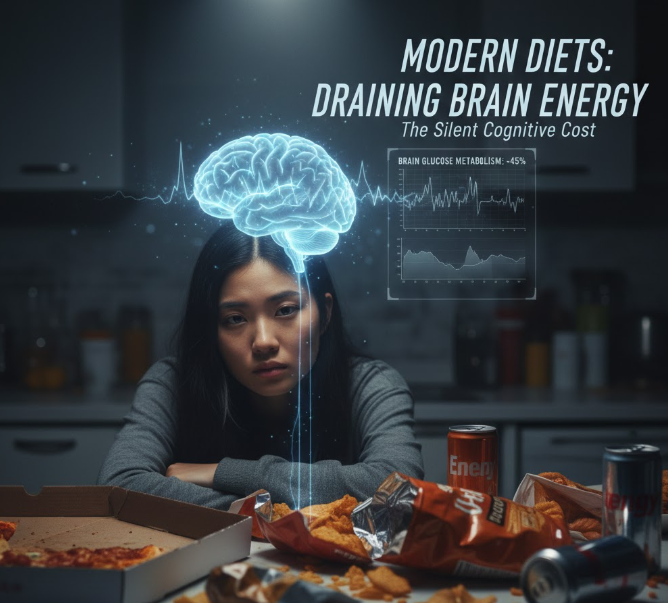
The Way Inflammatory Foods Rob You of Your Mental Acuity
Inflammation is a normal reaction of your body to trauma or infection. However, diet-induced chronic, low-level inflammation provides chronic issues to the brain energy.
Some foods cause an inflammatory process in the entire body, which also includes the brain. The biggest culprits are:
Refined vegetable oils: Corn oil, soybean oil, and canola oil are very high in omega-6 fatty acids, which cause inflammation.
Trans fats: Used in most fried foods and baked goods, these are highly inflammatory artificial fats.
Too much sugar: Large amounts of sugar cause inflammatory processes in the body.
Refined carbohydrates: White bread, pasta and rice also produce the same effect as sugar, i.e. inflammatory reaction.
Brain inflammation makes the production of energy to be less efficient. Imagine inflammation as rust on the machinery; all the machinery is slower and harder.
The Hydration Factor One Person Forgets
Your brain is about 75% water. Minor dehydration has an impact on its functioning as well. Research indicates that a water loss of 1-2 percent of your body water mass will affect concentration, mood and mental performance.
The majority of human beings are in a state of constant mild dehydration. They have substituted water with coffee, soda and energy drinks. These drinks do not hydrate as well as ordinary water. Others are in fact a cause of dehydration.
Dehydration lowers blood supply in the brain. The flow of blood becomes slow, and consequently, your brain gets less oxygen and fewer nutrients. The manufacture of energy gets slowed down. You are tired and hazy but you do not associate it with lack of sufficient water.
The easiest answer to the question? Take water regularly throughout the day. One must begin with half your body weight in ounces. In case you are 150 pounds, target 75 ounces of water per day.
Brain-Draining vs. Brain-Boosting Foods: A Rapid Comparison
| Brain-Draining Foods | Brain-Boosting Foods |
|---|---|
| Sugary cereals | Eggs and vegetables |
| Pastries | Whole grain oats and nuts |
| Soda and energy drinks | Water and green tea |
| Processed snack foods | Fatty fish (salmon, sardines) |
| White bread and rice | Quinoa and brown rice |
| Vegetable oils | Avocado and olive oil |
| Candy | Berries and dark chocolate |
| Chips | Raw nuts and seeds |
Restore Your Brain Energy: 5 Easy Things to Do to Get Your Brain Back to Normal
You do not have to have an entire diet change in one night. Minor and systematic alterations generate massive brain energy changes with time.
1. Protein in the morning: Have at least 20-30 grams of protein in the morning. This level stabilizes blood sugar and gives long-term energy.
2. Add foods rich in omega-3: Intake fish rich in omega-3 twice per week, or consume a high-quality fish oil supplement.
3. Slow down the consumption of processed food: Swap one processed product weekly with a whole food substitute.
4. Hydrate: Have a water bottle with you and take sips throughout the day.
5. Plan your meals: You should attempt to eat within a period of 12 hours instead of snacking throughout the day.
6. Add some fermented foods: Add a serving of yogurt, kefir or sauerkraut to your daily menu.
7. Select complex carbohydrates: Substitute white bread and rice with whole grain products.
8. Reduce added sugar: Read food labels; purchase those that contain less than 5 grams of added sugar in a single serving.
For more insights on optimizing your health and wellness through better nutrition choices, visit Rokvia for evidence-based guidance on living your healthiest life.
The Long-Term Cost of Ignoring Brain Nutrition
The influence of unhealthy nutrition on the energy of the brain is not only about being sleepy today. They build up as you age and risk you developing severe cognitive issues.
Studies have associated malnourishment over a long period of time with the speeding up of brain deterioration. Individuals with a consistent pattern of consuming ultra-processed diets experience an accelerated aging process in cognitive functions. They also increase their vulnerability to such diseases as Alzheimer’s disease and dementia.
According to research from Harvard Medical School, brain damage that has been caused by years of bad food is not necessarily fixable. The sooner you change, however, the more you have to save and even recover your mental powers.
Brain nutrition can be viewed as an investment. Each nutritious meal you consume is a credit into your psychological treasury. The results are improved concentration, clear thinking, ability to remember and lifelong energy.
Your Path Forward Starts Now
The contemporary diets have established a silent brain energy crisis. The processed foods, high sugar, absence of nutrients and inflammatory foods are taking away your mental energy without you even realizing it.
However, the first step to change is awareness. Now that you know how your eating habits can influence your brain, you are able to make informed decisions that help you to achieve the best mental functioning.
You don’t need perfection. You need consistency. Even tiny shifts in your day-to-day food options lead to radical changes in the way your brain works.
Begin by making one change this week. Replace your morning pastry with eggs and vegetables. Replace your afternoon soda with lemon water. Incorporate some nuts in your lunch.
It will not only benefit your brain – your thinking will become clear and more focused, and your energy will last longer than a day. The power to be able to reclaim your mental energy is just sitting on your plate.
Frequently Asked Questions
What is the time taken to see positive changes in my brain energy when I change my diet?
The majority of individuals report first improvements in 3-7 days of reducing sugar and processed food. The positive results of a change in the state of mind and prolonged activity are most likely to be observed after 2-3 weeks of consistent healthy nutrition. The optimal brain performance can only be restored in 2-3 months as your body restores nutrient reserves and repairs damage caused by inflammation.
Is it all about diet-induced brain fog?
Diet is one of the key causes of brain fog but not necessarily the only one. Though mental fatigue and lack of clarity in thoughts is often due to poor nutrition, sleep deprivation, stress, hormonal imbalances and medical conditions may also contribute. In case you do not feel better after a few weeks, a medical professional can help you eliminate other problems.
What is the most important thing I can do to be more brain-energized?
The most effective single change is the stabilization of your blood sugar. This is by decreasing refined sugars and carbohydrates and increasing protein, healthy fats and fiber. When blood sugar levels remain constant during the day, your brain is supplied with the energy it needs without the fatiguing highs and lows that leave your state mentally burned out.
Is a diet supplement necessary?
A proper diet that mostly consists of whole-food can provide most individuals with enough brain nutrients. Nonetheless, some nutrients such as fatty acids (omega-3), vitamin B12 (particularly among vegans) and vitamin D are usually low despite good dieting. Most of them can be helped by a simple fish oil supplement and vitamin D during winter. One should always take advice before beginning a supplement regimen.
What is the effect of intermittent fasting on the brain energy?
Intermittent fasting can in fact enhance brain energy among many people because it decreases insulin resistance and increases ketone production. Nonetheless, there might be a phase of initial exhaustion due to the process of adaptation (first 1-2 weeks). Most of them are observed to experience increased mental clarity and prolonged energy once they have been adapted. Begin slow and pay attention to your body.