
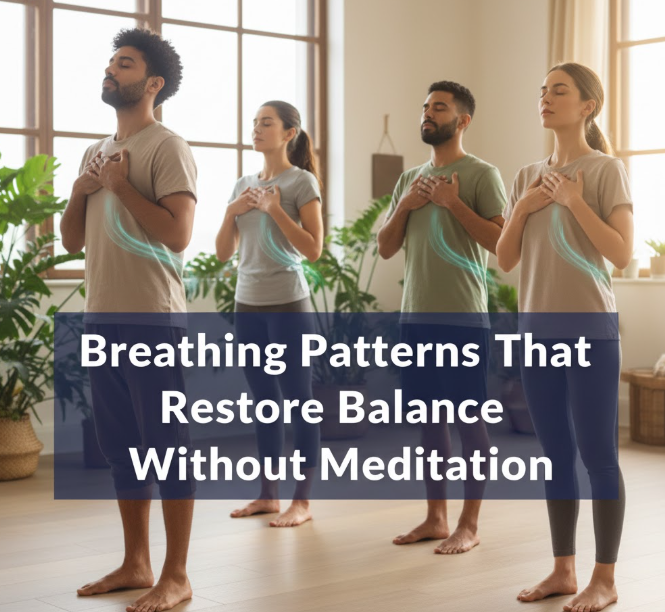
Why Your Breath Counts More Than You Think
You have your breath with you always. Now, when you read what I have written, you are breathing and you are not even considering it. However, there is one more thing; I would like to tell you that the change of breathing can make you change the way your mood is entirely.
Most people feel that to achieve calm and balance they have to sit in a cross-legged position and meditate for hours before finding the balance. That’s not true. All you need is a few minutes to re-tune your nervous system with your breathing pattern, clear your mind and get your body in balance again.
Your breathing is shallow and fast when you are stressed. When you relax, it slows and lowers the pitch. However, this is the wonderful part: this relationship goes both ways. Change your breath, and change your state of mind. No sitting cushion needed.
This article will demonstrate to you specifically how to adopt special breathing patterns to bring back sanity in your life routine. These are scientifically supported methods that are simple to master and applicable in real life scenarios such as traffic jams, work pressure or prior to important meetings.
Scientific Foundations of Breathing and Balance
There are two working systems in your body: the action system and the system of rest. These are referred to by scientists as sympathetic and parasympathetic nervous systems.
The sympathetic system switches on once you become stressed. It’s your fight-or-flight mode. The heartbeats increase, the muscles contract, the breathing becomes quicker. This mechanism assisted our ancestors to flee danger.
The opposite is done by the parasympathetic system. It’s your rest-and-digest mode. The heart rate becomes slower, the muscles become slack and breathing becomes deeper. It is at this time that your body repairs itself.
This is where the breathing comes in strong: it is the only natural body process that you can control consciously. You cannot directly slow down your heartbeat or reduce your blood pressure by thinking about it. But you can change your breath. And when you do, then everything follows.
You stimulate your vagus nerve when you breathe deeply and slowly. This nerve passes through your brain, through your chest and stomach. It is like a highway which transfers calm signals in your body. The more you breathe in order to stimulate this nerve, the more you feel balanced.
Studies have found that in a few minutes, controlled breaths can decrease cortisol (your stress hormone), blood pressure and tension. A single study concluded that individuals who engaged in certain breathing habits over five minutes had immediate results of reduced levels of anxiety.
Four Major Components of Breath Balancing
There are four building blocks of effective breathing. Before we get into details, you must know:
Inhale Length
This is how long you breathe in. Longer breaths put more oxygen in your system and are likely to make you feel more energetic. They stimulate your sympathetic nervous system to an extent.
Exhale Length
This is the length of your exhalation. Extended breathing triggers your parasympathetic system and produces relaxation. The trick of relaxing immediately is to make your exhale longer than the inhalation.
Breath Holds
These are pauses in breathing. Holding after an inhalation develops power and concentration. The pause after a breath enhances calmness and stillness.
Breathing Location
You may breathe into your chest or your belly. Belly breathing (sometimes known as diaphragmatic breathing) is more effective and relaxing. Your diaphragm is a strong muscle which is located below your lungs.
These elements are useful to understand how to tailor breathing patterns to various circumstances. Need energy? Emphasize the inhale. Need calm? Extend the exhale.
Box Breathing: The Navy SEAL Method
Box breathing is practiced by Navy SEALs in order to remain composed during combat. If it works for them it will work on your stressful day.
How to Do It
The result of this pattern is four equal sides, like a box. Each side lasts four counts.
- Inhale for four counts using the nose. Fill your belly first, and then your chest.
- Hold for four counts. Relax your body while holding it.
- Exhale using the nose or mouth for four counts. Empty completely.
- Hold empty for four counts. The pause should not be straining, but feel natural.
Repeat this process five to ten times.
When to Use Box Breathing
This is the method that is ideally suited to occasions when you have to concentrate and relax simultaneously. Use it when you are about to give a presentation, during an argument or when you feel overwhelmed. It is used prior to competitions by athletes. It is employed by executives in making major decisions.
The equal timing brings out the feeling of organization and control. Something straightforward has your mind to follow and your anxious thoughts do not have time to get out of control.
The 4-7-8 Technique: Your Natural Sleeping Aid
This old breathing pattern was popularized by Dr. Andrew Weil. This is referred to by people as a natural tranquilizer of the nervous system. It is quicker than the majority of sleep drugs and has no side effects.
How to Do It
- Place your tongue against the ridge behind your upper front teeth. Hold it there during the whole exercise.
- Exhale through your mouth, making a whoosh sound.
- Close your mouth and inhale silently through your nose for four counts.
- Hold your breath for seven counts.
- Exhale fully once again using the mouth for eight counts with a whoosh sound.
That’s one cycle. Repeat 3 more times for a total of four breath cycles.
Why the Timing Matters
The 4-7-8 ratio is created with a specific purpose: to slow your heart and put deep relaxation in effect. The long hold causes accumulation of carbon dioxide in your blood and this actually works to help your body accept more oxygen. The prolonged exhale will send information to your nervous system that you are no longer in danger.
Apply this pattern in cases when you are not able to sleep, you are anxious or you need to relax as soon as possible. Some individuals feel initially lightheaded. In case that occurs, reduce the number of cycles until your body becomes accustomed.
Alternate Nostril Breathing: Balance Both Brain Hemispheres
This is a yoga-style method that does not need any religious beliefs. It has been discovered to literally balance the activity of your brain between your left and right hemisphere by scientists.
How to Do It
Sit straight, in an upright position. You may do this anywhere, even at your desk.
- Close your right nostril with your right thumb.
- Inhale for four counts using your left nostril.
- Close your left nostril with your ring finger.
- Release your right nostril.
- Exhale for four counts through your right nostril.
- Inhale for four counts through your right nostril.
- Close your right nostril with the thumb.
- Release your left nostril.
- Exhale through your left nostril for four counts.
That’s one complete cycle. Do five to ten cycles.
Why This Pattern is Special
Each nostril is connected to different parts of your brain and nervous system. Your left brain is stimulated by the right nostril and generates a little more energy. Your right brain is triggered by your left nostril and brings you more peace.
Alternating balances the systems. Research indicates that this pattern enhances concentration, decreases stress, and even assists in treating headaches. It works especially well with individuals who feel mentally scattered or are emotionally reactive.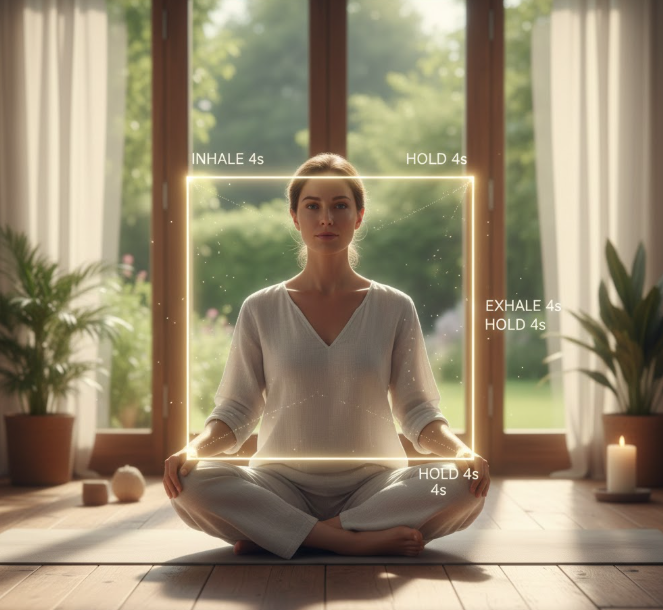
Physiological Sigh: The Quickest Stress Relief
This is the quickest method of calming down as discovered by Stanford neuroscientist Dr. Andrew Huberman. This is something that your body automatically does when you are crying or overwhelmed. Now you can use it on purpose.
How to Do It
- Breathe in through your nose, half way filling your lungs.
- Without stopping, take a second sharp breath through your nose to fill the lungs completely. This double inhale is the key.
- Take your time to breathe out through the mouth until you feel you have emptied your lungs. Allow the breath-out to be prolonged.
Do this once, or two to three times every time you are stressed.
The Science Explained
This pattern is effective due to the physiology of lungs. Lungs contain small air sacs which sometimes collapse during stress. The double inhalation pops them back open and this sends a strong message to your brain that you are safe. The deep exhale activates your relaxation mechanism.
A single physiological sigh takes seconds to lower stress levels compared to other breathing exercises that take a whole minute. Use it when you are having a tense moment, when you have received bad news or every time you feel that your chest is tightening.
Coherent Breathing: Find Your Ideal Rhythm
The average human being has a breathing rate of 15-20 breaths per minute. Coherent breathing reduces this to only five breaths per minute. This particular rate brings about absolute harmony in your body systems.
How to Do It
- Inhale for five counts using your nose.
- Exhale through your nose for five counts.
- Repeat for five to ten minutes.
No holds or intricate patterns. Only even breathing at six-second breaths.
Why Five Breaths a Minute is Magic
Naturally, your heart rate increases when inhaling and decreases when exhaling. This is referred to as heart rate variability, and it is an indicator of health and resilience.
When your breaths come five times every minute, the changes in your heart rate synchronize perfectly. Your whole cardiovascular system begins to harmonize. Blood pressure stabilizes. Stress hormones drop. Mental clarity improves.
This is used to enhance performance by athletes. It is taught by therapists for anxiety and depression. You can use it whenever you need to reset and rebalance. For more comprehensive wellness strategies, explore additional resources at Rokvia.
Energizing Breath: When You Need a Natural Boost
Sometimes you don’t need calm. You need to be lively and alert. This pattern is more effective than coffee and does not lead to a crash later.
How to Do It
- Sit up straight.
- Take 30 sharp, deep breaths using your mouth or nose. Breathing ought to be active inhaling and passive exhaling. Pump in and out with your belly.
- After 30 breaths, breathe out and empty, holding as long as you can.
- When you need air, inhale deeply and hold for 10-15 seconds.
- That’s one round. Do two to three rounds.
Safety Note
This technique is powerful. Do not do it while driving, swimming or standing. Always sit or lie down. Some people experience tingling or lightheadedness. This is normal but stop if you feel uncomfortable.
How It Energizes You
This rapid breathing floods your body with oxygen and temporarily reduces carbon dioxide. This shifts your blood to an alkaline state. Then empty lungs fill with carbon dioxide again. This cycle trains your cells to be efficient in the use of oxygen.
Many individuals have reported that they felt alert, clear-headed, and energetic for several hours after just a few rounds. It is ideal to get out of afternoon slumps or to prepare for workouts.
Building Your Practice
So, now that you are familiar with these patterns, how do you apply them to the real world?
Match to Your Need
- Feeling anxious? Use 4-7-8 or alternate nostril breathing.
- Need focus? Try coherent breathing or box breathing.
- Want energy? Use energizing breath.
- Quick stress relief? Physiological sigh.
Start Small
Do not attempt daily breathing exercises that last ten minutes at first. Start with one or two minutes. Perform one pattern once or twice a day. Develop the habit, and then increase the time.
Use Triggers
Associate breathing with current practices. Do box breathing as your coffee is brewing. Practice 4-7-8 after you brush your teeth at night. Take physiological sighs whenever there is a red light.
Track What Works
Make notes on your phone. Which patterns help most? What is your schedule of practicing? What changes do you notice? This feedback helps you perfect your practice.
Top Five Mistakes and How to Correct Them
Breathing Too Hard
Hard work does not mean better results. Breathe gently and smoothly. Force creates tension, not balance.
Breathing Into Your Chest
Chest breathing is shallow and ineffective. Place one hand on your belly and one on your chest. The belly hand must move more compared to the chest hand.
Holding Tension
Keep your shoulders, face and jaw relaxed during breathing exercises. Tension blocks the benefits. Check for tightness and willfully relax those parts.
Expecting Instant Perfection
Your early efforts will feel clumsy. That’s normal. Breathing patterns like any other skill improve with practice. Be patient with yourself.
Practicing Only at the Last Minute
There is no better time to practice breathing skills than when you are calm. The patterns will not work as well if you practice only when you are in panic. Regular practice ensures that the techniques are available when needed.
Frequently Asked Questions
When will I be able to see results?
Most people observe instant effects, particularly with physiological sighs or 4-7-8 breathing. The more profound changes in stress resilience require two to three weeks of daily practice.
Are breathing patterns substitutable for therapy or medication?
No. These methods are stress coping and well-being enhancing strategies. They are not treatments for severe mental illnesses. Always use the services of healthcare professionals when it comes to major problems.
Is it normal to feel dizzy?
Lightheadedness may occur occasionally, particularly with energizing breathing exercises or when you are new to breathing practice. Slow down or reduce the intensity. Do not continue if dizziness is severe or painful.
How often should I practice?
Between five and ten minutes per day is best. However, even two minutes several times a week has advantages. Consistency is more important than duration.
Can I do them while doing other things?
Basic patterns such as coherent breathing work well when walking or performing simple activities. More complex exercises such as alternate nostril breathing require your full attention. Never do energizing breath while driving or operating machinery.
What should I do when I cannot breathe through my nose?
Most patterns can work with mouth breathing but nose breathing is usually more effective. If you cannot clear your nose due to allergies or congestion, talk to a doctor.
Bringing It All Together
Balance is not something that one discovers and maintains forever. It is something you rebuild each moment, each day. These breathing patterns enable you to restore balance whenever you need it.
No special equipment, no expensive classes, no hours of time are required. You need only your breath and a few minutes. These methods are applicable in your car, at your desk, in your bed or any other place where life happens.
Begin with one pattern that appeals to you. Practice it for a week. Notice what changes. Then add another if you want. It is not about learning all techniques. The idea is to possess handy tools that bring balance to your life at the time when you need it the most.
Your breath has been your companion since the beginning of your life. You will have it until your end. In between those times, it may be your strongest tool for providing peace, concentration and balance in a chaotic world.
Just remember: the next time stress strikes, you are only a few breaths away from feeling better. No meditation required.